Key takeaways
The biology is real
NAD+ is essential for cellular energy, DNA repair, and stress-response pathways tied to aging.
Precursors can raise levels
Human studies show NR and NMN can increase NAD+ or related metabolites in blood — but that is not the same as proven outcomes.
Longevity claims outpace evidence
There is not yet strong proof that NAD+ supplementation extends lifespan or meaningfully slows aging in healthy adults.
This article is for educational purposes only and is not a substitute for professional medical advice. A licensed clinician can determine whether treatment is appropriate for you.
The balanced version
NAD+ has become one of the biggest buzzwords in longevity. It shows up in supplement ads, IV drip clinics, biohacking podcasts, and anti-aging protocols. The promise is usually simple: NAD+ supports cellular energy, NAD+ declines with age, so boosting NAD+ may help you age better. There is real science behind that idea. NAD+ is not a fad molecule. It is essential for life. It helps cells turn food into energy, supports DNA repair, and plays a role in stress-response pathways that are closely tied to aging biology. But the marketing has moved faster than the human evidence. Here is the balanced version: NAD+ biology is promising, NAD+ precursors can raise NAD+ levels in humans, but there is not yet strong proof that NAD+ supplementation extends lifespan or meaningfully slows aging in healthy people.
What is NAD+?
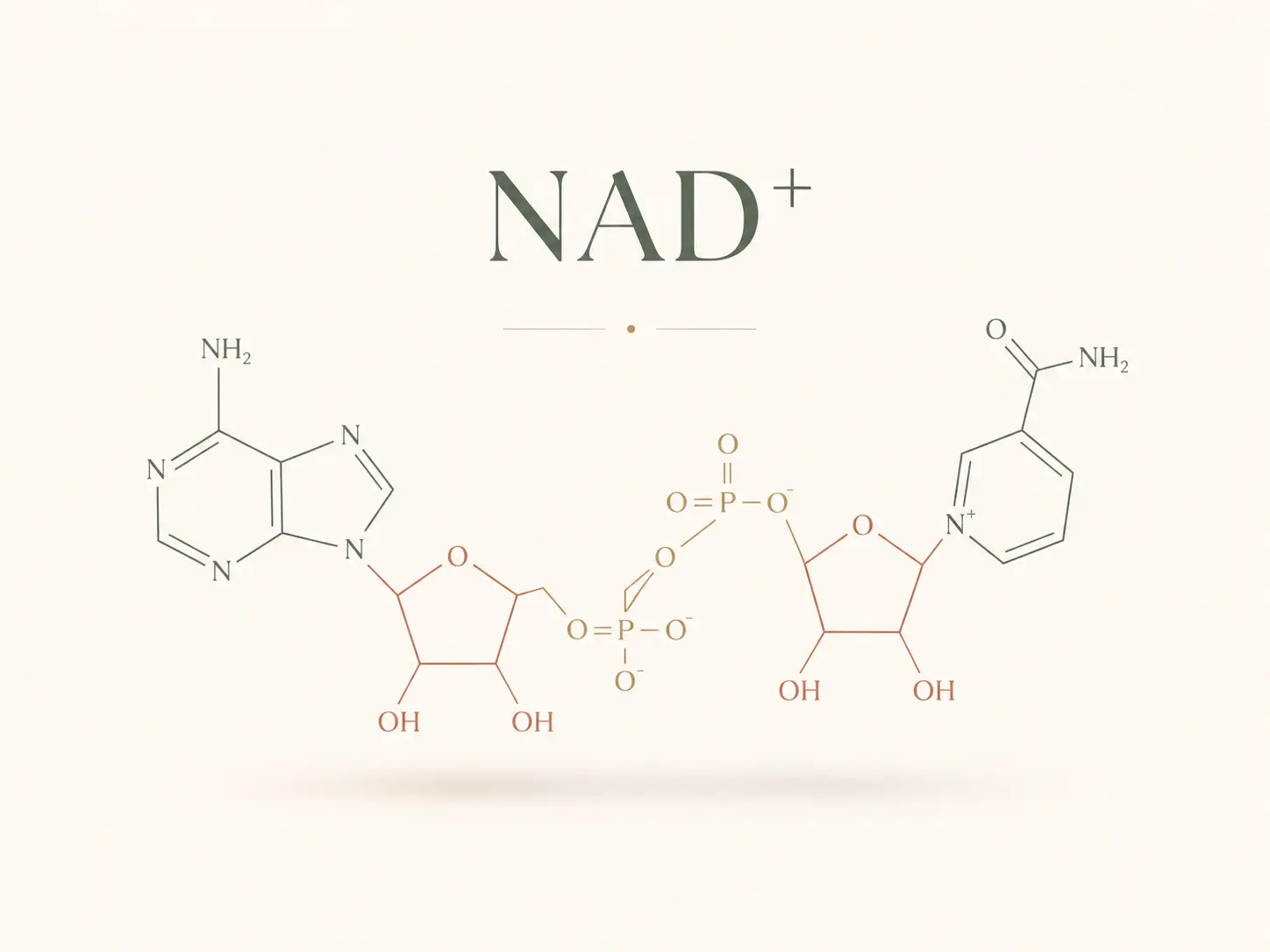
NAD+ stands for nicotinamide adenine dinucleotide. It is a coenzyme found in every cell of the body. One of its main jobs is helping convert nutrients into usable cellular energy. NAD+ and its related form, NADH, act like electron carriers, moving energy through metabolic pathways that keep cells functioning. Cleveland Clinic describes NAD+ and NADH as a shuttle system that helps the body turn food into energy. NAD+ is also used by enzymes involved in DNA repair, inflammation, mitochondrial function, and cellular stress response. These are some of the same systems researchers study when they look at aging, metabolic health, neurodegeneration, and tissue repair. That is why NAD+ has become interesting in longevity research. It sits at the intersection of energy, repair, and resilience.
Does NAD+ decline with age?
In many studies, NAD+ levels appear to decline with age, although the picture is not perfectly simple. A major review in Nature Metabolism noted that NAD+ levels decline during aging and that pathways involved in NAD+ production and breakdown change over time. Another review found reductions in NAD+ in worms, rodents, and human samples, but also emphasized that the degree of decline can vary by tissue and measurement method. This matters because "NAD+ declines with age" is broadly supported, but it should not be interpreted as "everyone has low NAD+" or "a blood NAD+ test perfectly reflects what is happening in every organ." NAD+ biology is tissue-specific. Muscle, liver, brain, skin, and blood may not all tell the same story.
Why researchers think NAD+ might matter for longevity
Aging is not caused by one thing. It involves accumulated changes in metabolism, DNA repair, inflammation, mitochondrial function, immune signaling, cellular cleanup, and more. NAD+ touches several of those systems. For example, NAD+ is required by sirtuins, a family of enzymes involved in cellular stress responses and metabolism. It is also used by PARPs, enzymes involved in DNA repair. If NAD+ availability drops, some of these repair and maintenance systems may work less efficiently. In animals, restoring NAD+ has shown promising effects in some models of aging and age-related disease. Researchers have reported improvements in mitochondrial function, metabolic health, tissue repair, and other markers. But animal data should be treated carefully. Many interventions that look impressive in mice do not produce the same results in humans. So the real question is not "Does NAD+ matter?" It does. The better question is: Does taking NAD+ or NAD+ precursors improve meaningful health outcomes in humans? The answer is: possibly in some contexts, but the evidence is still early.
Can you take NAD+ directly?
This is where things get confusing. Many products are marketed as "NAD+ supplements," but the body does not necessarily use oral NAD+ the same way it uses NAD+ made inside cells. Because NAD+ itself is a large molecule and may not be efficiently absorbed into cells when taken orally, much of the research has focused on NAD+ precursors. These are compounds the body can use to make NAD+.
- Nicotinamide riboside (NR) — A form of vitamin B3 that has been studied in human trials.
- Nicotinamide mononucleotide (NMN) — Another NAD+ precursor that has gained major attention in longevity circles.
- Niacin and nicotinamide — Older vitamin B3 forms that also feed into NAD+ metabolism, though they have different effects and tolerability profiles.
What human studies actually show
The most consistent finding is that NAD+ precursors can raise NAD+ levels or related metabolites in humans. A 2023 review of NMN studies concluded that NMN supplementation can increase NAD+ concentrations and may influence aging-related pathways, but the authors also noted that more clinical evidence is needed to determine long-term effects and therapeutic value. A 2025 review in npj Aging summarized NAD+ metabolism as relevant to aging and chronic disorders, including cognitive decline, sarcopenia, and metabolic disease, but the field is still moving from mechanism and early trials toward stronger clinical evidence. Some clinical trials have looked at outcomes like muscle function, insulin sensitivity, body composition, fatigue, cognition, inflammatory markers, and vascular function. Results have been mixed. Some studies show signals of benefit in specific groups. Others show that NAD+ levels rise without obvious improvements in clinical outcomes. That does not mean NAD+ precursors "do nothing." It means the evidence is not yet strong enough to claim that they reliably improve longevity, weight loss, cognition, or energy in the average healthy adult.
What about NAD+ and weight loss?
NAD+ is involved in metabolism, so it is often marketed for weight loss. But this is one of the areas where people should be especially cautious. There is no strong evidence that NAD+ supplementation by itself causes meaningful fat loss. NAD+ pathways are involved in cellular energy metabolism, but that does not mean taking an NAD+ product will produce weight loss. For weight management, the best-supported foundations remain calorie balance, adequate protein, physical activity, resistance training, sleep, and treatment of underlying metabolic conditions when appropriate. NAD+ support may eventually prove useful for certain metabolic populations, but it should not be positioned as a primary weight-loss therapy based on current evidence.
What about NAD+ IV drips?
NAD+ IV therapy has become popular in wellness clinics, often promoted for energy, anti-aging, detox, brain health, or addiction recovery. This is where the claims often get ahead of the data. There is limited high-quality clinical evidence showing that NAD+ IV drips produce meaningful anti-aging benefits. Media and medical experts have raised concerns about clinics selling NAD+ infusions for conditions like substance misuse without strong proof of effectiveness. IV NAD+ may also cause side effects during infusion, such as nausea, flushing, chest tightness, headache, or discomfort, depending on the dose and infusion rate. And because IV therapy bypasses normal digestion, quality control and medical supervision matter. For longevity specifically, the most honest statement is this: NAD+ IV therapy is not proven to reverse aging or extend lifespan.
Is NAD+ safe?
Short-term studies of common NAD+ precursors such as NR and NMN generally suggest they are reasonably well tolerated in healthy adults, but long-term safety data is still limited. The lack of long-term data matters because longevity supplements are often taken daily for months or years. People should be more cautious if they are pregnant, breastfeeding, being treated for cancer, have active liver or kidney disease, take multiple medications, or have complex medical conditions. NAD+ is involved in fundamental cellular processes, so "natural" does not automatically mean risk-free. Another issue is product quality. Supplements are not regulated like prescription drugs. Dose accuracy, purity, contaminants, and ingredient identity can vary by manufacturer. Choosing products with third-party testing is important.
What is the FDA status of NMN?
NMN has had a complicated regulatory history in the United States. In 2022, the FDA took the position that NMN was excluded from the dietary supplement category because it had been authorized for investigation as a drug. However, in September 2025, FDA reversed course and stated that NMN is not excluded from the definition of a dietary supplement, according to legal summaries of the FDA's citizen petition response. That regulatory update does not mean NMN is proven to slow aging. It only addresses whether NMN can be marketed as a dietary supplement under the relevant legal framework.
What lifestyle habits support NAD+ naturally?
One reason NAD+ research is exciting is that it overlaps with habits already known to support healthy aging. Exercise appears to be one of the most reliable ways to support mitochondrial health and metabolic resilience. Calorie moderation, sleep, circadian rhythm consistency, and limiting excess alcohol may also influence NAD+ biology indirectly through metabolic and inflammatory pathways. This is important because even if NAD+ supplements turn out to be useful, they are unlikely to replace the basics. A supplement cannot fully compensate for poor sleep, inactivity, low muscle mass, excess alcohol intake, or an ultra-processed diet. For most people, NAD+ support should be thought of as a possible add-on, not the foundation.
What the research supports today
The evidence is strongest for these statements:
- NAD+ is essential for cellular energy metabolism and repair processes.
- NAD+ levels and NAD+ metabolism often change with aging, though this varies by tissue and measurement method.
- NAD+ precursors such as NR and NMN can raise NAD+ levels or related metabolites in humans.
- Animal and cellular studies are promising, but human clinical outcomes are still mixed and incomplete.
- There is not yet strong proof that NAD+ supplementation extends lifespan, reverses aging, or reliably improves weight loss, cognition, or energy in healthy adults.
A practical way to think about NAD+
The best way to understand NAD+ is to separate mechanism, biomarker, and outcome.
- Mechanism: NAD+ is clearly important. It plays central roles in metabolism, repair, and cellular function.
- Biomarker: NAD+ precursors can often raise NAD+ levels or NAD+-related metabolites.
- Outcome: We do not yet know whether raising NAD+ consistently leads to better long-term health, slower aging, or longer lifespan in humans.
That last step is the hard one. Longevity research requires long timelines, large studies, and meaningful endpoints. Feeling better after a supplement is not the same as proving improved healthspan. A higher NAD+ level is not the same as a lower risk of disease.
The takeaway
NAD+ is one of the most interesting areas in aging biology. The science is real, and the research is worth following. But the current evidence does not justify exaggerated claims that NAD+ supplements or IV drips reverse aging, guarantee weight loss, or extend human lifespan. A fair summary is this: NAD+ matters. NAD+ may decline with age. NAD+ precursors can raise NAD+ levels. But whether supplementation meaningfully improves longevity in healthy humans remains unproven. For people interested in healthy aging, the best-supported strategy is still the least flashy: build muscle, stay active, eat enough protein and fiber, sleep well, manage metabolic risk, avoid smoking, limit excess alcohol, and maintain strong relationships. NAD+ may eventually become part of a science-backed longevity toolkit, but it is not a shortcut around the fundamentals.

Related reads



References
This article draws on clinical references, peer-reviewed reviews, and reporting on NAD+ supplementation and therapy.
- Cleveland Clinic. NAD (Nicotinamide Adenine Dinucleotide). https://my.clevelandclinic.org/health/body/nad-nicotinamide-adenine-dinucleotide
- Conlon NJ. The Role of NAD+ in Regenerative Medicine. Plast Reconstr Surg. 2022. https://pmc.ncbi.nlm.nih.gov/articles/PMC9512238/
- Covarrubias AJ et al. NAD+ metabolism and its roles in cellular processes during ageing. Nat Rev Mol Cell Biol. 2020. https://pmc.ncbi.nlm.nih.gov/articles/PMC7963035/
- Schultz MB, Baur JA. Age-related NAD+ decline. Exp Gerontol. 2020. https://pmc.ncbi.nlm.nih.gov/articles/PMC7442590/
- The Safety and Antiaging Effects of Nicotinamide Mononucleotide in Human Clinical Trials: an Update. Adv Nutr. 2023. https://pmc.ncbi.nlm.nih.gov/articles/PMC10721522/
- The role of NAD+ metabolism and its modulation of mitochondria in aging and disease. npj Metabolic Health and Disease. 2025. https://www.nature.com/articles/s44324-025-00067-0
- The Guardian. It's not ethical and it's not medical: how UK rehab clinics are cashing in on NAD. 2025. https://www.theguardian.com/society/2025/feb/23/its-not-ethical-and-its-not-medical-how-uk-rehab-clinics-are-cashing-in-on-nad
- Venable LLP. FDA Declares Nicotinamide Mononucleotide Is Not Excluded from the Definition of a Dietary Supplement. 2025. https://www.venable.com/insights/publications/2025/10/fda-declares-nicotinamide-mononucleotide-is